

7 Translation Mistakes That Can Delay Your Embassy or Immigration ApplicationAfter months of preparing documents, booking appointments, and paying application fees, some applicants are surprised to learn that their files require corrections or resubmission because of a simple translation issue.In many cases, the problem is not with the original document itself, but with the way the information has been translated. This is why certified translation is one of the most important steps when preparing documents for travel, study, immigration, employment, or international legal procedures.In this article, we highlight some of the most common translation mistakes that can affect the acceptance of official documents and explain how they can be avoided.1. Inconsistent Name Spelling Across DocumentsOne of the most common issues faced by embassy and immigration applicants is inconsistency in the spelling of names.A person’s name may appear one way in a passport and differently in a birth certificate, academic certificate, or translated document.Even a minor difference in spelling or name order can raise questions and lead to additional verification requests.For this reason, all names should match the primary official documents exactly, especially the passport.2. Incorrect Translation of DatesMost official documents contain important dates, including:- Date of birth- Date of document issuance- Date of marriage- Graduation date- Employment and work experience datesAny error in these details can create discrepancies between documents within the same application file.3. Literal Translation of Legal TerminologyNot every legal term has a direct word-for-word equivalent in another language.Contracts, powers of attorney, court judgments, and other legal documents require translators who understand legal terminology and the context in which it is used.A literal translation may unintentionally alter the meaning of the original document and create confusion for the receiving authority.4. Ignoring Official Stamps and NotesSome official documents contain:- Government stamps- Marginal notes- Official certifications- Additional annotationsThese elements may form an essential part of the document and should be accurately reflected in the translation whenever applicable.5. Using Non-Specialized Translation for Academic QualificationsAcademic degrees, diplomas, and educational titles often vary from one country to another.Translating educational documents requires familiarity with internationally recognized academic terminology to ensure that universities, employers, and authorities clearly understand the qualification being presented.6. Relying on Machine Translation for Official DocumentsTranslation technology has advanced significantly in recent years, but automated translation tools are still not suitable for sensitive official documents.Machine translation may produce errors in:- Legal terminology- Government authority names- Job titles- Formal administrative languageIn some cases, the translation may appear grammatically correct while remaining unsuitable or unacceptable for official purposes.7. Failing to Review the Document Before SubmissionEven the most accurate translation should undergo a final review.Minor typographical mistakes, inconsistencies in names, numbers, or dates, and formatting issues can sometimes go unnoticed.A thorough final review is therefore an essential step before submitting any official document.Why Is Certified Translation an Investment in Your Application?When dealing with embassies, immigration authorities, universities, or international institutions, documents are far more than pieces of paper. They represent your identity, academic background, professional experience, and legal status.Choosing a professional certified translation provider helps minimize the risk of errors and can save significant time, effort, and costs associated with corrections or reprocessing.How Can Middle East Institute Help?With more than 15 years of experience in certified translation, Middle East Institute provides professional translation services for official documents submitted to embassies, consulates, universities, and immigration authorities in Egypt and abroad.Services include the translation of:- Birth, marriage, and divorce certificates- Academic certificates and transcripts- Employment and experience certificates- Criminal record certificates- Contracts and powers of attorney- Commercial registers and tax cards- Medical reports- Immigration and travel documentsAll translations are delivered with a commitment to accuracy, confidentiality, and timely completion.ConclusionA translation mistake may seem minor, but in some cases it can result in delays, requests for additional documentation, or the need to resubmit an entire file.Certified translation is not simply about translating words. It is about ensuring that your information is presented accurately, clearly, and professionally to embassies, immigration authorities, universities, and international institutions.The higher the quality of the translation, the smoother and more confident your application process is likely to be.
Back to articles
September 12, 2026
7 Translation Mistakes That Can Delay Your Embassy or Immigration!!
Ready to Submit Your Documents?
Get a certified translation quote before your deadline.
Send your documents on WhatsApp to receive a clear quote, processing time, and next steps for official submission.
- Fast reply on WhatsApp, usually within the hour
- Clear price and delivery time before you commit
- Certified translations accepted by embassies, courts, and immigration offices
Sat-Thu, 9:00 AM-5:00 PM, Alexandria, Egypt
More Reading
Related Articles
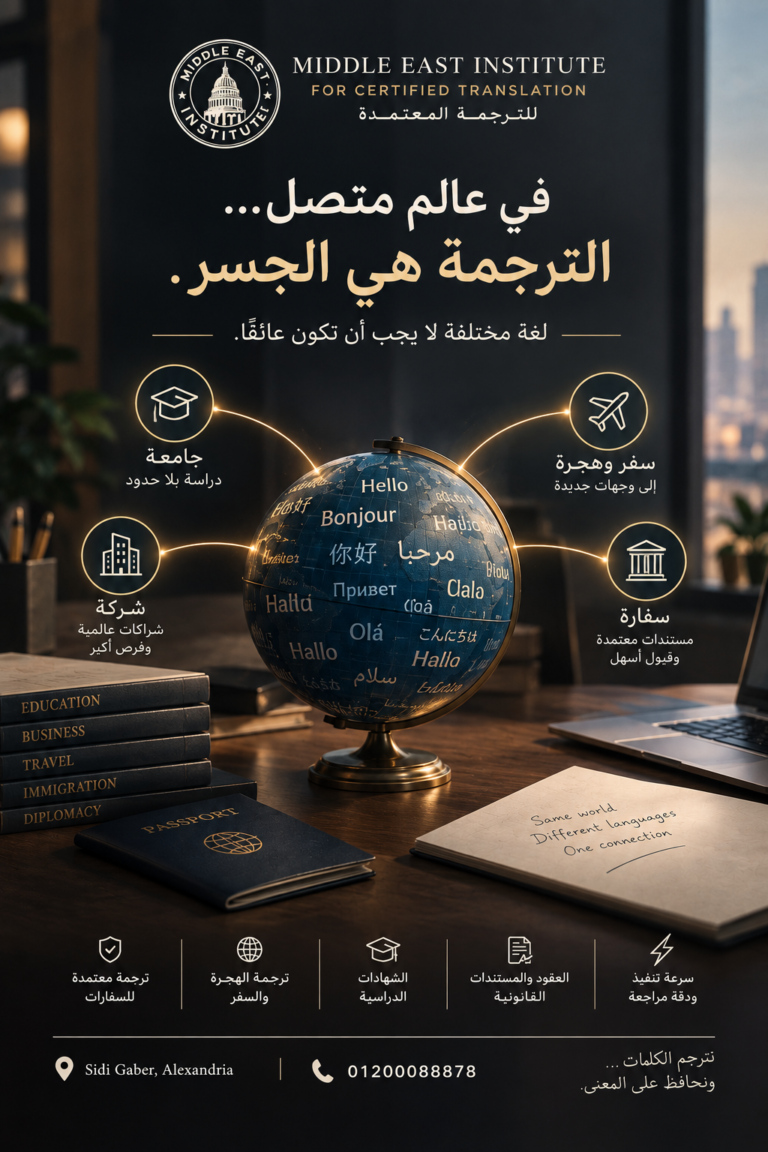
Embassies and Certified Translation
Embassies and Certified Translation:Why Do Thousands of Successful Applications Begin with One Correct Step?In a world where international travel, overseas education, immigration, and global…
Read article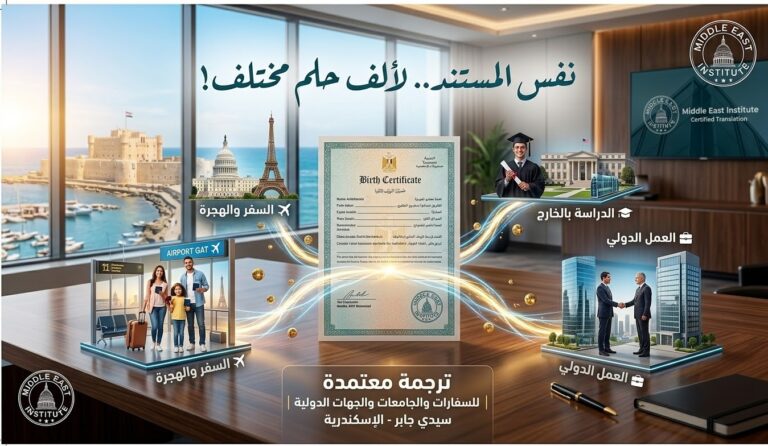
Why Should Middle East Institute Be Your First Choice for Certified Translation in Alexandria?
Why Should Middle East Institute Be Your First Choice for Certified Translation in Alexandria? | A Comprehensive Q&A GuideIf you are looking for a…
Read article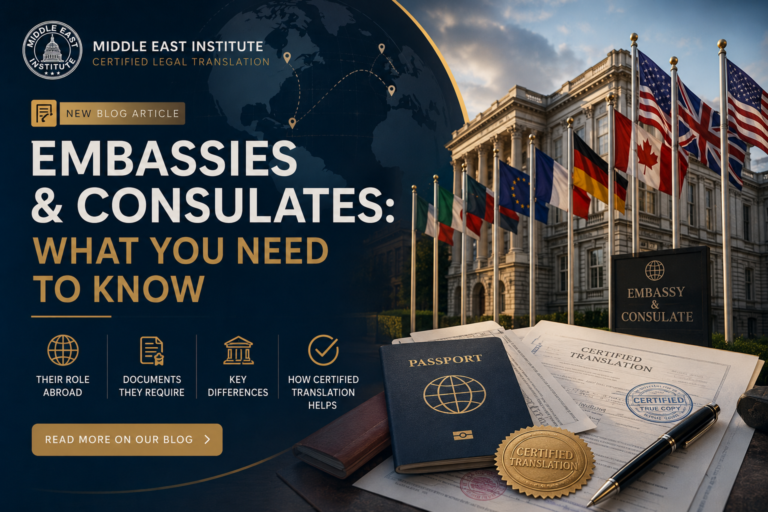
Embassies and Consulates
Embassies, Consulates, and Certified Translation: The Complete Guide to Everything You Need to Know Before Submitting Your Documents | Questions & AnswersIf you are…
Read article